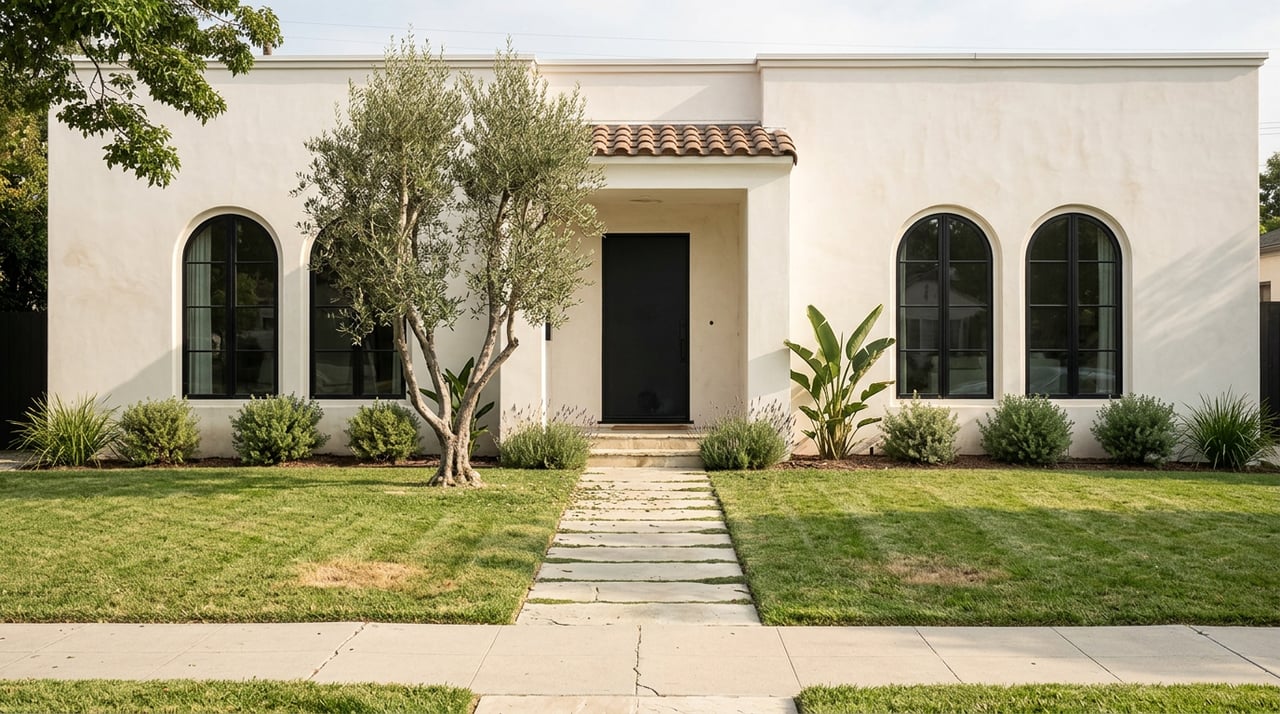
Every few weeks a buyer touring homes in Sunset Park asks us some version of the same question: if this house sits inside Santa Monica's rent control zone, will they inherit a stranger's lease at a rent frozen sometime in the 1980s?
The fear is understandable. Santa Monica's Rent Control Charter Amendment, passed by voters in April 1979, has a reputation that precedes it. But for the overwhelming majority of buyers looking at a single-family home or a condo, that fear is unfounded. Under the state's Costa-Hawkins Rental Housing Act, single-family homes and condominiums are exempt from local rent control regardless of when they were built. Santa Monica's ordinance only reaches multi-unit rental buildings, two units or more, constructed before April 10, 1979. Buy a house on a quiet Sunset Park street and you are not buying into anyone's tenancy. Buy a fourplex in Ocean Park from the 1960s and the calculation changes entirely.
That distinction matters because it's the kind of friction that only surfaces once you're already in escrow, and it points to a bigger problem with how people research this city. Santa Monica gets talked about as a single market with a single median price. It isn't one, and the gap between what the headline number says and what any specific parcel is actually worth is wider here than in almost any other Westside neighborhood.
The Median Everyone Quotes Isn't the Market You're Buying Into
As of August 2026, tracked closings across Santa Monica over the trailing six months put the median sale price at $1.8 million. That number is real. It's also nearly useless for anyone comparing North of Montana to Sunset Park to Ocean Park, because the middle half of those same closings ranged from $1.1 million to $2.875 million, a spread of $1.775 million between the 25th and 75th percentile. A single citywide figure sitting in the middle of that range describes almost nothing about what you'll actually pay in any one neighborhood.
The spread exists because Santa Monica's geography splits the city into distinct product types that rarely compete for the same buyer. A downtown condo, a Sunset Park bungalow, and a North of Montana estate on a 10,000-square-foot lot aren't substitutes for one another. They're three separate housing markets that happen to share a zip code prefix.
Three Santa Monicas, Three Different Deals
| Neighborhood | Housing stock | Typical single-family entry point (2026) | Character |
|---|---|---|---|
| North of Montana (90402) | Traditional and Cape Cod homes on larger lots | Roughly $4.3M and up, move-in-ready homes commonly $6.5M to $14M | Wide, tree-lined streets, deep setbacks, walk to the Montana Avenue boutique corridor |
| Sunset Park (90405) | 1940s bungalows alongside newer construction, high concentration of R2-zoned lots | Median around $2.85M | Tree-lined residential grid, quieter pace, ADU-friendly lots |
| Ocean Park (90405) | Condos, duplexes, older beach cottages | Condos roughly $1.2M to $2.5M, price per square foot pushing toward $1,875 to $2,200 | Walkable to Main Street, denser, faster-moving inventory |
Three things stand out. Sunset Park and Ocean Park share the same 90405 zip code but have different housing mixes: Sunset Park is characterized by single-family homes, while Ocean Park is more condo-heavy and walkability-driven. Ocean Park's price per square foot, which reached $1,875 by mid-2026 and climbs toward $2,200 in select comps, can rival the 90402 zip code's average, where per-square-foot pricing frequently exceeds $1,950, despite Ocean Park's far lower entry price, because you're paying for density and beach proximity rather than lot size. And all three neighborhoods sit inside the same school district, which raises an obvious question: what exactly is North of Montana's premium buying?
Same District, Different Price Tag
North of Montana, Sunset Park, and Ocean Park all feed into the Santa Monica-Malibu Unified School District. A family moving to Sunset Park isn't opting out of the district that serves North of Montana. Franklin Elementary, the campus most closely associated with North of Montana's northern blocks, broke ground this past June on a district-funded expansion, a new early learning building, playfield, and parking, as enrollment growth pushed the school past its recommended size. Roosevelt Elementary, on the same side of town, began its own modernization construction the same month, with completion targeted for 2028. Both projects say the same thing: the district is investing across its full footprint, not concentrating resources in one neighborhood at the expense of another.
What North of Montana's premium actually buys is lot size, street width, and proximity to the Montana Avenue corridor itself, not a different school system. That's a meaningfully different value proposition than most buyers assume when they first see the price gap: the premium buys width and address, not access to a different district.
The 2028 Date Nobody's Pricing In Yet
Here's the detail that changes how we'd advise a family choosing between Sunset Park and Ocean Park right now. The Santa Monica Airport is closing permanently on December 31, 2028. The city has reaffirmed that date, the FAA settlement behind it dates to 2017, and the council has already voted to convert the roughly 192-acre site into a public park under Measure LC, the 2014 ballot measure requiring the land become open space rather than housing or commercial development. The city hired Sasaki, an internationally known planning firm, and released a Draft Framework Diagram in early 2026 that organizes the site into eight districts, including areas for native habitat, organized athletics, and arts and culture.
For decades, proximity to the airport was a discount, not a premium. Homes closest to the flight path in Sunset Park absorbed noise that homes further north never had to think about. That calculation is now running in reverse. A 192-acre park is a fixed, dated event, not a maybe. Sunset Park borders that future park to the east, and buyers who move now are effectively buying ahead of an amenity that doesn't exist on the ground yet but is already locked into the city's planning timeline. That's a different kind of value than North of Montana's established prestige. It's a bet on a specific calendar date rather than a bet on a neighborhood's existing reputation, and it's the one variable in this comparison that the citywide median has no way to capture.
What Rent Control Actually Touches, and What It Doesn't
Back to where we started. If you're buying a single-family home or a condo anywhere in Santa Monica, including Sunset Park and Ocean Park, the Rent Control Charter Amendment doesn't attach to your purchase. If you're buying a duplex, triplex, or any building with two or more units constructed before April 10, 1979, it does, and it changes your buyer pool. Investors underwriting a rent-stabilized building typically price in existing below-market tenancies, which can pull offers 15 to 25 percent below what an equivalent vacant property would command. The city's Rent Control Board sets the annual allowable increase each year. For 2026, that adjustment is 2.6 percent, effective September 1, capped at $70 a month for units already renting above a set threshold.
If you're evaluating a smaller multi-unit property in Ocean Park, where older buildings sit next to newer condos more often than in Sunset Park's mostly single-family grid, a short checklist before you write an offer:
- Confirm the building's actual certificate of occupancy date, not just its apparent age
- Pull Maximum Allowable Rent records for every covered unit through the city's rent control office
- Ask directly whether current rents reflect vacancy decontrol or long-term below-market tenancies
None of that applies if you're buying a house. It applies constantly if you're buying income property, and knowing which category your target falls into before you tour it saves a wasted afternoon and a confusing conversation with your lender.
The Number Worth Watching
Santa Monica's citywide median will keep moving, and it will keep telling you less than you think it does. The number that actually matters depends on which of these three cities-within-a-city you're buying into, whether your building predates April 1979, and whether your target sits close enough to the airport site to benefit from a park that's already on the calendar. None of that shows up in a single headline figure, and none of it is available on a portal search.
If you're comparing North of Montana, Sunset Park, and Ocean Park and want someone who can walk the specific blocks with you, Team Stacy White knows this market street by street. Let's Find Your Westside Home.
A Few Questions We Hear Often
Does Santa Monica's rent control affect buying a single-family home or condo? No. Under the state's Costa-Hawkins Rental Housing Act, single-family homes and condominiums are exempt from local rent control regardless of construction date. Santa Monica's ordinance applies to multi-unit rental buildings with two or more units built before April 10, 1979.
Is North of Montana's price premium about better schools? No. North of Montana, Sunset Park, and Ocean Park all feed into the Santa Monica-Malibu Unified School District. The premium reflects lot size, street character, and proximity to the Montana Avenue corridor, not a different school system.
This article is general information, not legal, tax or financial advice. Consult a qualified professional about your situation.